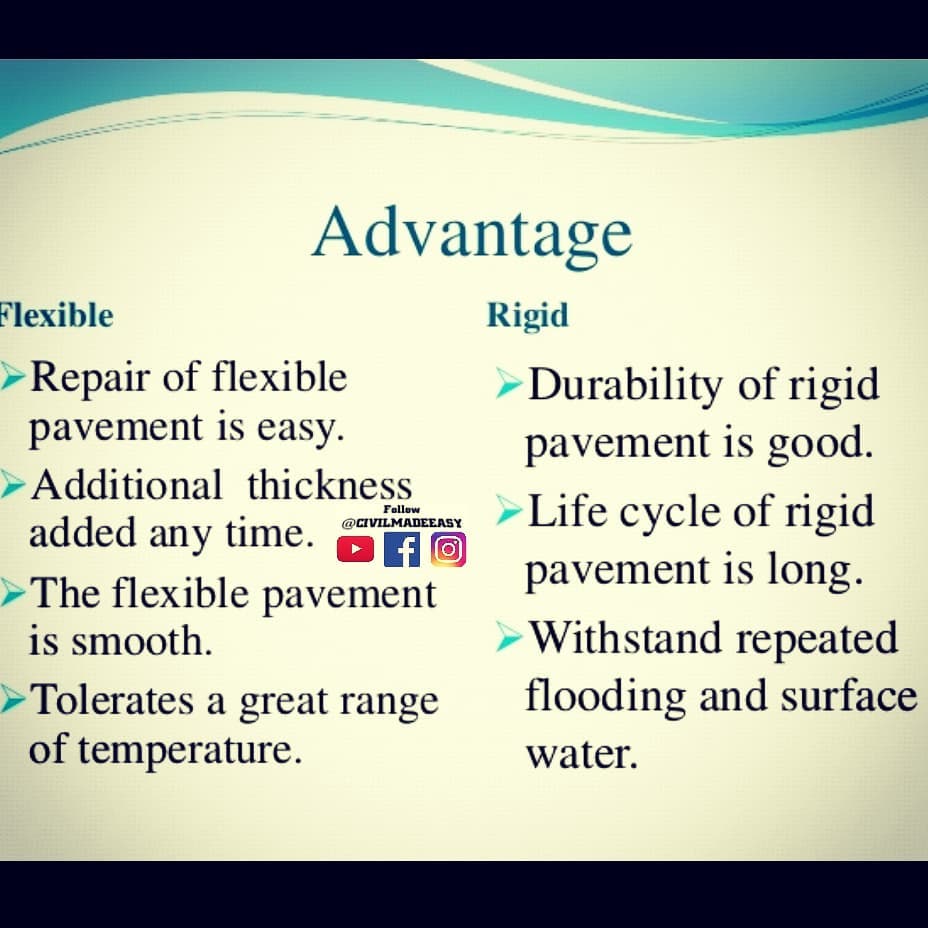
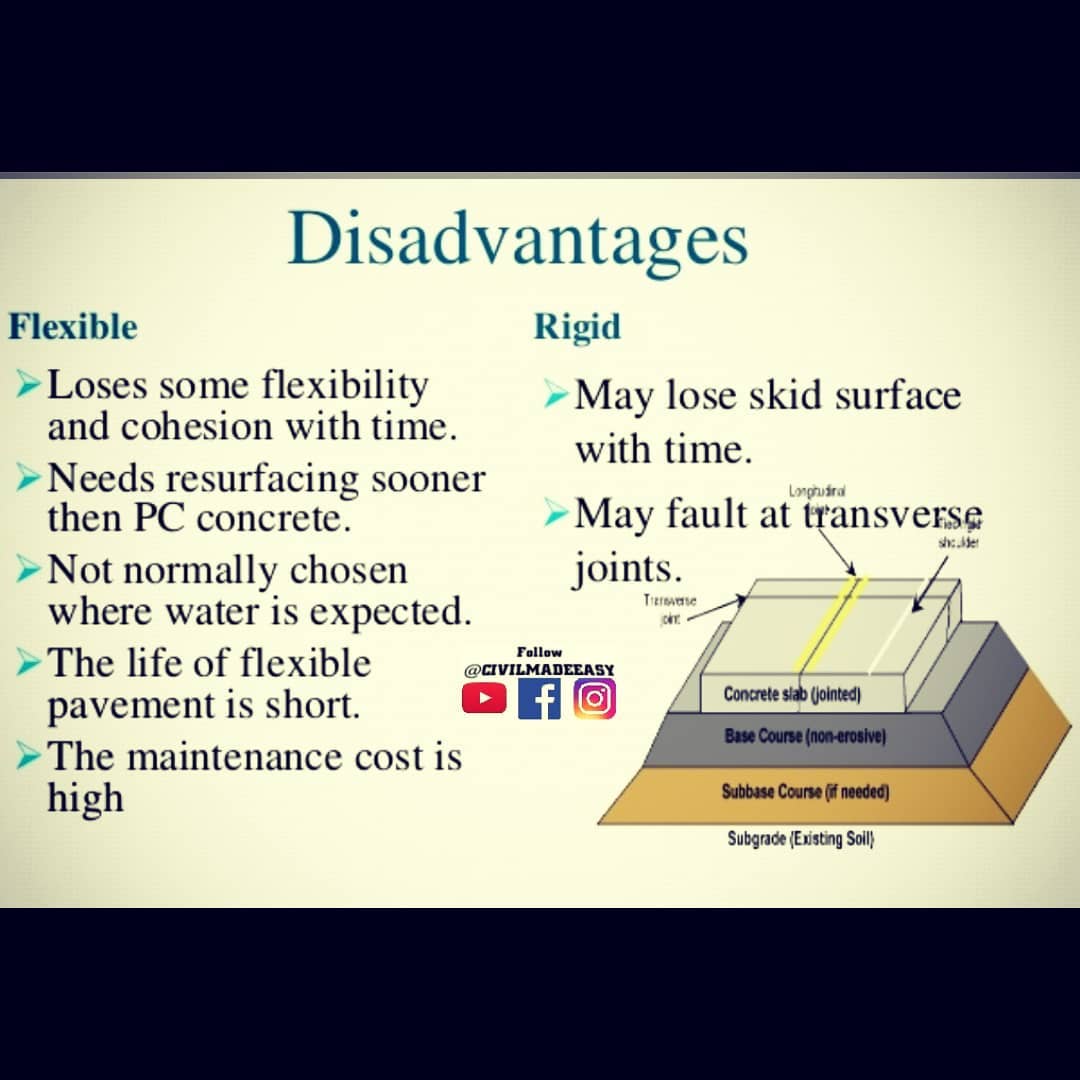
Advantages and Disadvantages of Flexible Pavement
We need to take precautions to eliminate drying shrinkage cracks and stress concentration cracks. Should be better than the material of Sub Grade.
Civil Made Easy Components And Advantage Disadvantages Facebook
What are the uses of road kerbs.

. Flexible pavements are the type of road pavement that can change their shape to some extent without rupture. This prevents the vehicle from parking beside the road. In addition flexible pavement defects rapidly.
In the case of the flexible pavement the loads that are generated by the movement of vehicles are transferred to the. Disadvantages of AAC Block. In case of rigid pavement only upper base course is provided.
Thickness varies from 75 3in to 15cm 6in Functions of sub base. Stress Distribution in Flexible Pavement. Prevent rise of water or capillary action.
Potholes and cracks are likely to appear due to heavy vehicular traffic and poor drainage. Cost of production higher than the ordinary concrete block or brick. It offers lateral stability to the granular base course and flexible pavements.
A valuable advantage of flexible pavement can be opened for traffic within 24 hrs after the completion of the road. Curb or kerbs are provided for the following purposes. In case of flexible pavement upper and lower base courses are separated having different materials.
The road pavements are mainly classified into two basic types which are as follows.

Difference Between Flexible Pavement And Rigid Pavement Flexibility Knowledge Development

Difference Between Flexible And Rigid Pavement Engineering Discoveries

Pin On Dream Civil Website
Civil Made Easy Components And Advantage Disadvantages Facebook

Soak Pit Construction Design Uses Advantages And Disadvantages Construction Design Soaks Stormwater
Rigid Pavement Construction 2 Types Features Advantages Disadvantages
0 Response to "Advantages and Disadvantages of Flexible Pavement"
Post a Comment